
How to Verify Real Muha Meds Before Buying
Use Several Checks Together
Packaging, batch information, QR-code results, seller details, and product consistency should support the same conclusion. Treat a single logo or scan as one signal rather than proof by itself, and pause if the information does not match.
When consumers search for authentic Muha Meds, one of the biggest questions is how to tell whether a product is genuine or counterfeit. Packaging can look convincing, product names can be copied, and images found online may not always represent the exact item being sold.
Understanding Muha Meds authenticity is therefore important before relying on a product's branding, packaging, QR code, or other identifying details. After reviewing this guide, browse our Muha Meds carts, all-in-one disposables, or concentrates collection.
This guide explains what consumers should look for when evaluating a Muha Meds product, how QR-code verification can work, why packaging details matter, and how to recognize potential warning signs of counterfeit products.
The goal is simple: know what you are looking at before assuming a product is authentic. You can return to the Muha Meds home page or view the full product collection when you are ready to shop.
What Does Authentic Muha Meds Mean?
The term authentic Muha Meds refers to products that are genuinely associated with the Muha Meds brand rather than unauthorized imitations or counterfeit products.
Counterfeit products may attempt to reproduce:
- Brand names
- Logos
- Packaging designs
- Product names
- QR codes
- Labels
- Color schemes
- Product photographs
- Batch information
- Hardware designs
Because counterfeit packaging can sometimes appear surprisingly similar to genuine packaging, consumers should avoid relying on only one visual characteristic.
Authenticity should instead be evaluated using several pieces of information together.
For example, a consumer might examine the packaging, product labeling, batch information, QR-code verification, manufacturer information, and the source from which the product was obtained.
This approach provides a much stronger basis for determining whether something appears legitimate.
Why Authenticity Matters
Checking whether a product is authentic is more than simply making sure the packaging looks right.
Counterfeit products may not have the same manufacturing standards, ingredients, testing procedures, labeling requirements, or quality controls associated with legitimate products.
This is particularly important with inhalable products, extracts, cartridges, and other cannabis-related products because consumers may have limited visibility into how an imitation product was manufactured.
An authentic product should be traceable to a legitimate source and identifiable through appropriate product information.
Consumers should therefore be cautious when encountering products with:
- Unusual packaging
- Spelling mistakes
- Missing information
- Poor-quality printing
- Unclear manufacturer details
- Inconsistent labels
- Suspicious QR codes
- Unverifiable batch information
- Packaging that differs substantially from official product examples
A professional-looking package is not necessarily proof of authenticity.
How to Identify Authentic Muha Meds
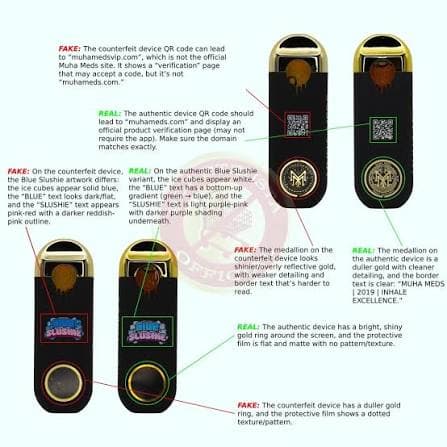
There isn't always one visual feature that can conclusively establish authenticity.
Instead, consumers should examine several characteristics together.
When checking a product, start with the packaging and labeling.
Look for consistency in:
- Product name
- Brand name
- Logo
- Typography
- Label placement
- Product information
- Batch or lot information
- Packaging quality
- QR-code placement
- Manufacturer information
- Required warnings and labeling
Compare the information on the physical product with information provided through legitimate brand or regulatory sources where available.
If the product has information that conflicts with official information, that should be treated as a warning sign.
Another important consideration is whether the product's packaging appears professionally manufactured.
Look closely at printing quality. Blurry text, inconsistent fonts, crooked labels, obvious spelling errors, strange spacing, or poor-quality graphics can indicate that packaging has been reproduced.
However, packaging quality alone should never be treated as definitive proof.
How to Scan the QR Code to Verify Authentic Muha Meds
One of the most useful authenticity checks may be the QR code included on the product packaging, when an official verification QR code is present.
A QR code can provide consumers with a way to access product or verification information.
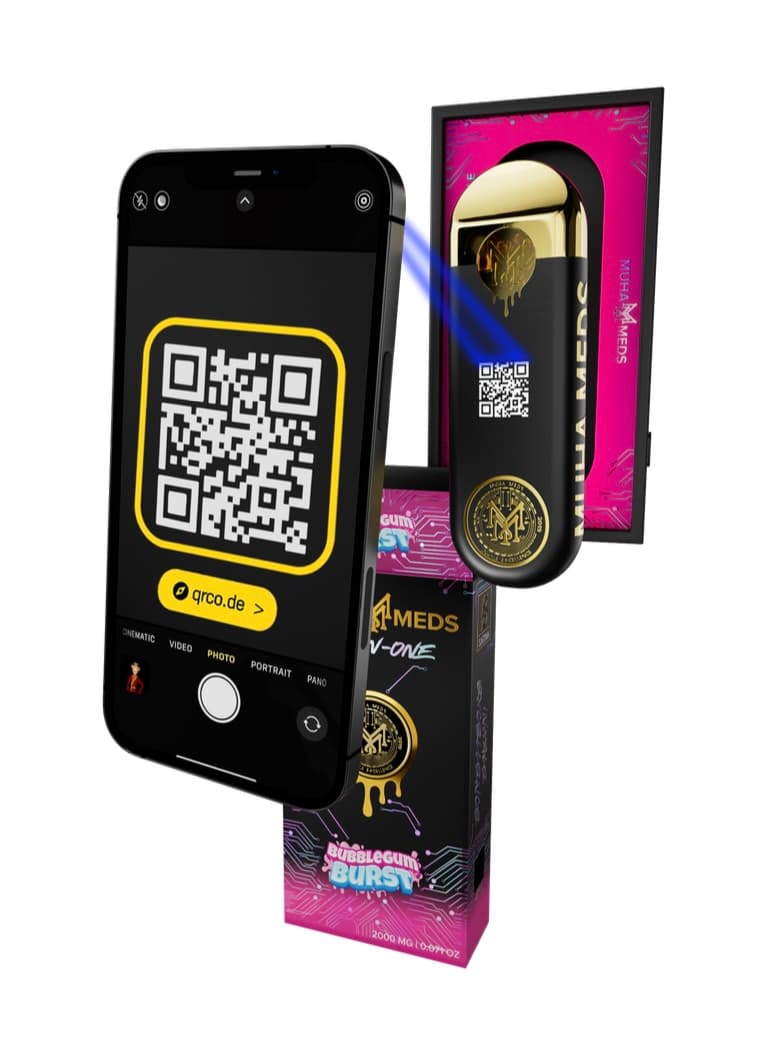
Step 1: Locate the QR Code
Look around the product packaging for a QR code specifically intended for verification.
Depending on the product and packaging design, the code may appear on:
- The exterior package
- A verification label
- A product sticker
- A security seal
- Another designated verification area
Do not assume that every QR code printed on packaging is an authenticity code. Some QR codes may simply direct consumers to general information.
Step 2: Scan the QR Code With Your Phone
Most modern smartphones can scan QR codes using the built-in camera.
Open the camera application and point it toward the QR code.
A notification or link should normally appear if the phone recognizes the code.
Tap the notification only after checking that the destination looks legitimate.
Step 3: Examine the Verification Page
If the QR code is intended for authenticity verification, the resulting page may provide information associated with the product.
Depending on the verification system, this could include information such as:
- Product identification
- Batch information
- Verification status
- Product details
- Authenticity information
The exact information available can vary depending on the verification system used.
Step 4: Compare the Information
Do not simply scan the QR code and assume that the product is automatically genuine.
Compare the information displayed by the verification system with the physical product.
For example, check whether the:
- Product name matches
- Batch information matches
- Product details correspond
- Packaging information is consistent
If the information doesn't match, treat the discrepancy seriously.
A QR Code Alone Does Not Guarantee Authenticity
This is an important point.
A counterfeit product can potentially contain a copied QR code.
Therefore, “there is a QR code on the package” does not automatically mean “the product is authentic.”
Consumers should verify that the QR code leads to the appropriate official verification system and that the information returned corresponds to the actual product.
If the QR code redirects to an unrelated website, produces an error, provides inconsistent information, or appears suspicious, additional verification is appropriate.
This is why Muha Meds QR code verification should be considered one part of an overall authenticity check rather than the only test.
Check Muha Meds Packaging
Packaging is another important area to examine when evaluating authentic Muha Meds products.
Start by looking at the overall quality.
Professional packaging generally has consistent:
- Printing
- Colors
- Typography
- Alignment
- Logos
- Labels
- Product information
Counterfeit packaging may contain subtle differences that become noticeable when compared with legitimate examples.
Pay particular attention to spelling.
A misspelled word does not automatically prove that something is counterfeit, but obvious spelling mistakes should make you investigate further.
Also examine the package for unusual wording.
If the product description contains information that doesn't make sense or differs significantly from legitimate product information, that may warrant additional checking.
Check Product and Batch Information
Product and batch information can be particularly useful when evaluating authenticity.
Depending on the product and jurisdiction, legitimate packaging may include information that helps identify the product or production batch.
Look for information such as:
- Batch number
- Lot number
- Product identification
- Manufacturer information
- Packaging date
- Testing information
- Required regulatory information
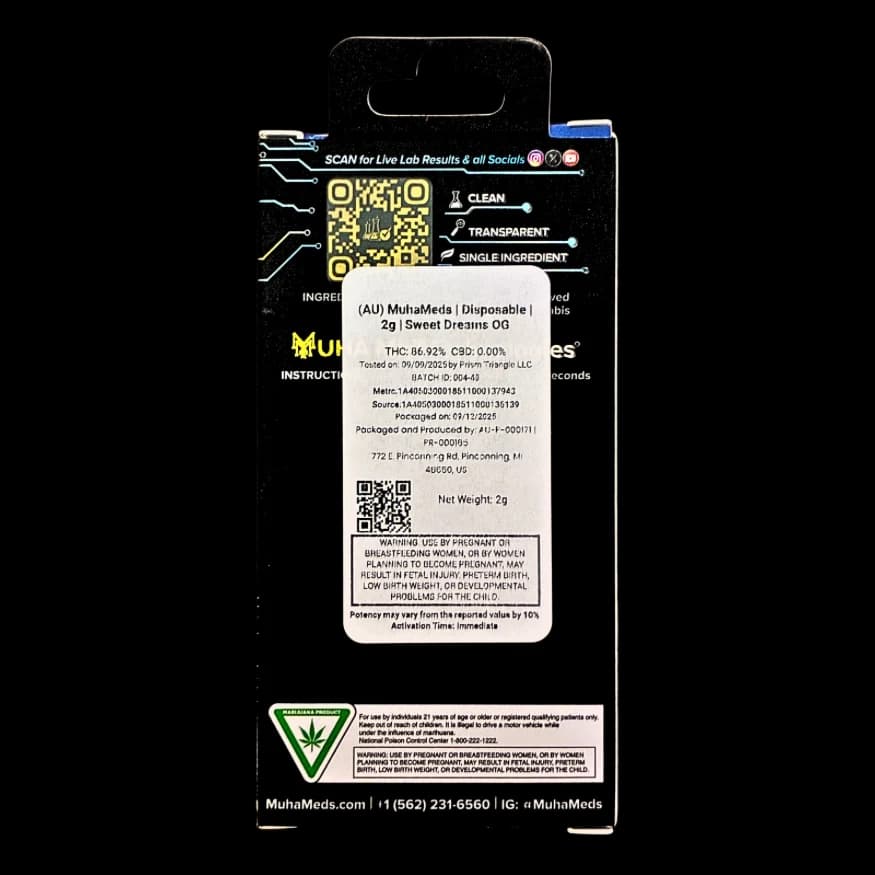
The specific requirements depend on the product and location.
If a package claims to contain detailed testing or batch information, consumers should be able to determine whether that information is meaningful and consistent.
If a batch number appears duplicated across unrelated products, is missing entirely where one would normally be expected, or doesn't correspond to available verification information, further investigation may be appropriate.
Muha Meds Verification: What Consumers Should Look For
Muha Meds verification should involve more than looking at the logo.
A strong authenticity check considers several independent indicators.
For example:
1. Packaging
Does the package appear professionally produced?
2. Product information
Does the product information appear complete and internally consistent?
3. Batch information
Is there identifiable batch or lot information where appropriate?
4. QR code
Does an official verification QR code work correctly?
5. Verification result
Does the information returned by the verification system match the physical product?
6. Source
Is the product coming from a legitimate and appropriately authorized source?
7. Regulatory information
Does the product have the labeling and compliance information required in the jurisdiction where it is being sold?
Looking at these factors together provides a much better authenticity assessment than relying on a single feature.
How to Evaluate an Authentic Muha Meds Shop
Consumers searching for an authentic Muha Meds shop should also evaluate the source itself.
A website can look professional while still providing limited information about where its products come from.
Before purchasing any regulated product, consumers should consider whether the seller provides appropriate information about:
- Business identity
- Contact information
- Location
- Regulatory authorization where applicable
- Product information
- Returns or customer-service policies
- Age requirements
- Legal compliance
- Product testing information
Consumers should also be aware of websites that make exaggerated claims.
Statements such as “100% guaranteed authentic” are not independently meaningful unless the seller provides evidence supporting that claim.
A trustworthy source should make it possible for customers to understand what they are purchasing and where it comes from.
Authentic Muha Meds for Sale: What to Look For
When consumers encounter listings described as authentic Muha Meds for sale, the word “authentic” itself should not be treated as proof.
Anyone can place the word “authentic” in a product title.
Instead, examine the actual evidence.
Look at the:
- Product photographs
- Packaging
- Label information
- Product description
- Batch information
- Verification options
- Seller information
- Applicable regulatory details
Be especially cautious when product images appear inconsistent across listings.
For example, if one listing shows packaging that looks completely different from another listing for the same supposed product, investigate before assuming both are genuine.
Buying Authentic Muha Meds Online
Online shopping creates an additional challenge because consumers often cannot physically inspect a product before purchasing.
A photograph may not show:
- The actual package
- The batch number
- The QR code
- The security label
- The manufacturing information
- The condition of the packaging
Product photographs can also be reused across multiple websites.
For this reason, consumers should evaluate the seller as carefully as they evaluate the product.
Before purchasing any regulated cannabis product online, confirm that the seller is legally authorized to sell the product in the relevant jurisdiction.
Laws regarding cannabis products vary considerably by location.
A product being advertised online does not necessarily mean that it can legally be sold or shipped to a particular destination.
Authentic Muha Meds Carts and Disposable Products
Cartridges and disposable products deserve particular attention because counterfeit versions can be difficult to distinguish visually.
When examining an authentic Muha Meds cart or disposable product, consider the complete package rather than only the hardware.
Look at:
- Packaging
- Product labeling
- Batch information
- QR code
- Verification information
- Manufacturer information
- Regulatory labeling
Don't rely solely on the appearance of the cartridge.
A counterfeit manufacturer can reproduce the general shape and appearance of popular hardware.
The packaging and traceability information can therefore be equally important.
Consumers should also avoid products with damaged, leaking, tampered, or suspicious packaging.
If something looks physically compromised, it is better not to use it until its authenticity and safety can be established.
Authentic vs. Counterfeit Muha Meds
Understanding the difference between authentic and counterfeit products starts with recognizing that counterfeit products can imitate branding extremely well.
Some warning signs include:
Unusual Packaging
The packaging may look slightly different from legitimate examples.
Poor Printing
Text may be blurry, colors may be inconsistent, or graphics may appear low quality.
Spelling Errors
Unexpected spelling or grammatical mistakes may indicate copied packaging.
Missing Information
Important product, batch, manufacturer, or regulatory information may be absent.
Suspicious QR Codes
The QR code may not work, may redirect somewhere unexpected, or may produce information that doesn't match the product.
Inconsistent Product Details
The product name, strain information, batch information, or other details may contradict one another.
Unusual Seller Claims
Promises that sound too good to be true should be treated carefully.
None of these signs individually proves that a product is counterfeit.
However, multiple warning signs together should encourage consumers to stop and investigate further.
Common Mistakes When Checking Authenticity
Consumers can make several common mistakes when trying to determine whether something is genuine.
Mistake 1: Trusting the Logo
A logo is easy to reproduce.
A familiar logo does not establish authenticity.
Mistake 2: Assuming a QR Code Is Proof
A QR code can be copied.
Always examine where it leads and whether the verification information matches the product.
Mistake 3: Checking Only the Photograph
Online photographs may not represent the exact product being sold.
Mistake 4: Ignoring Batch Information
Batch or lot information can be an important part of product traceability.
Mistake 5: Assuming a Professional Website Is Enough
A professional-looking website does not independently establish that its products are authentic.
Mistake 6: Ignoring Regulatory Requirements
Cannabis regulations vary by jurisdiction, and legitimate products may be subject to specific labeling and testing requirements.
Mistake 7: Relying on One Test
The best approach is to combine several indicators.
How to Check if Muha Meds Is Real
If you're asking “How can I check if my Muha Meds product is real?”, use a systematic process.
Start with the packaging.
Then check the product information.
Next, locate any official verification QR code and scan it.
Compare the verification result with the product's physical information.
Then examine the seller and applicable regulatory information.
A simple process looks like this:
Packaging → Product information → Batch information → QR verification → Verification result → Seller/source → Regulatory information
If all of these elements appear consistent, you have more information with which to evaluate the product.
If several elements conflict, don't ignore those inconsistencies.
Authentic Muha Meds Products: What Information Should Be Consistent?
When evaluating authentic Muha Meds products, consistency is one of the most useful concepts to remember.
The information on the packaging should make sense as a complete set.
For example, the product name should correspond with the product information.
The batch information should correspond with any available verification information.
The QR code should lead to the appropriate verification system when one is provided.
The manufacturer's information should be consistent with legitimate information available for the product.
When multiple independent details agree, confidence in the product's authenticity can increase.
Why Product Verification Is Important
Verification systems exist to help consumers distinguish legitimate products from imitations.
A properly implemented verification system can potentially connect a physical product to information stored by a manufacturer or authorized system.
That makes verification particularly useful because it goes beyond visual inspection.
However, consumers should still understand the limitations.
No single verification method should automatically replace common sense.
If a QR code works but the packaging contains multiple other inconsistencies, consumers should investigate further.
Likewise, if a package looks genuine but its verification information doesn't match, that discrepancy should not be ignored.
What to Do if a Product Seems Suspicious
If you believe a product may be counterfeit or tampered with, don't simply assume it is genuine because the package looks convincing.
Document the information available to you.
This may include:
- Photographs of the packaging
- Product name
- Batch or lot number
- QR-code result
- Verification information
- Seller information
- Purchase documentation
If an official manufacturer or regulatory authority provides a way to report suspected counterfeit products, consumers can use the appropriate reporting channel.
If a product appears damaged, contaminated, tampered with, or otherwise unsafe, don't use it.
When dealing with cannabis products, local laws and regulations should also be considered.
Authenticity Checklist
Here is a simple authentic Muha Meds checklist consumers can use.
Packaging
- ☐ Packaging appears professionally produced
- ☐ No obvious spelling errors
- ☐ Labels are properly aligned
- ☐ Product information appears consistent
- ☐ No obvious signs of tampering
Product information
- ☐ Product name is clearly identified
- ☐ Batch or lot information is present where appropriate
- ☐ Manufacturer information is available
- ☐ Required labeling appears present
QR verification
- ☐ An official verification QR code is present where applicable
- ☐ QR code scans successfully
- ☐ QR code leads to the appropriate verification system
- ☐ Verification information matches the product
- ☐ Product and batch information correspond
Seller
- ☐ Seller identity is clear
- ☐ Seller provides appropriate contact information
- ☐ Seller appears legally authorized where required
- ☐ Product information is transparent
- ☐ Claims are reasonable and verifiable
The more of these checks that can be independently confirmed, the better informed the consumer can be.
Frequently Asked Questions About Authentic Muha Meds
How can I tell if Muha Meds is authentic?
Start by examining the packaging, product information, batch information, QR code, verification result, and source of the product.
Don't rely on the logo or packaging alone.
Can I scan the Muha Meds QR code to check if it is real?
If the product contains an official QR code intended for authenticity verification, you can scan it using your smartphone.
Check the destination and compare the information displayed with the physical product.
A QR code by itself is not an automatic guarantee of authenticity because counterfeit packaging can potentially reproduce QR codes.
What should happen when I scan a verification QR code?
The result depends on the verification system.
An official verification system may provide product or batch information that allows you to compare the digital record with the physical product.
If the result doesn't correspond with your product, investigate before assuming the product is genuine.
Can counterfeit Muha Meds have a QR code?
Yes, the presence of a QR code alone should not be considered conclusive proof.
The important questions are where the QR code leads and whether the information returned corresponds to the physical product.
How do I verify authentic Muha Meds online?
Look for consistent product information, legitimate seller information, appropriate regulatory details, and available official verification tools.
If a product includes an official verification QR code, scan it and compare the result with the package.
What is Muha Meds authenticity verification?
Muha Meds authenticity verification refers to the process of checking whether a product appears to be genuinely associated with the brand.
This can include examining packaging, product information, batch details, QR-code verification, and source information.
Is packaging enough to prove authenticity?
No.
Packaging can be copied.
Packaging should be treated as one part of a broader authenticity assessment.
Why should I check the batch number?
Batch or lot information can help establish product traceability.
Where an official verification system is available, batch information may also allow consumers to compare the physical product against verification information.
What if my QR code doesn't work?
A QR code that doesn't scan or produces an unexpected result should be treated as a warning sign, but it does not automatically establish that a product is counterfeit.
Check whether the code is intended for verification and whether the phone is reading it correctly.
If the issue persists, use an appropriate official verification or customer-support channel if one is available.
What if the QR code works but the product still looks suspicious?
Don't ignore the other warning signs.
A working QR code should be considered alongside packaging, batch information, product details, and seller information.
If several details conflict, further verification is appropriate.
The Importance of Buying From Legitimate Sources
Where cannabis products are legally available, consumers should use sources that are authorized under the laws applicable to their location.
Legal cannabis markets can have specific requirements concerning:
- Licensing
- Product testing
- Packaging
- Labeling
- THC disclosures
- Batch information
- Age verification
- Distribution
These requirements vary by jurisdiction.
A legitimate source should be able to provide appropriate information about the products it sells and comply with applicable laws.
Consumers should therefore research the rules in their own jurisdiction rather than assuming that a product advertised online can legally be purchased or shipped to them.
Authentic Muha Meds and Consumer Awareness
The search for authentic Muha Meds ultimately comes down to consumer awareness.
Counterfeit products often succeed because consumers focus on one recognizable feature.
They may see the logo and assume the product is genuine.
They may see a QR code and assume it proves authenticity.
They may see professional packaging and assume the seller is legitimate.
A better approach is to look at the entire picture.
Check the packaging.
Check the product information.
Check the batch information.
Scan the official verification QR code when available.
Review the verification result.
Evaluate the source.
Consider the applicable regulatory requirements.
This process takes a little more time, but it provides a much more informed basis for evaluating a product.
Final Thoughts
Understanding how to identify authentic Muha Meds is important for consumers who want to distinguish legitimate products from potential counterfeits.
The most important lesson is not to rely on a single feature.
Packaging can be copied.
Logos can be reproduced.
Product photographs can be reused.
Even QR codes can potentially be duplicated.
Instead, use multiple verification signals together.
If an official QR-code verification system is provided, scan the QR code and compare the verification information with the physical product. Check the product name, batch information, packaging, manufacturer details, and other identifying information.
If something doesn't match, don't simply overlook it.
The same principle applies when evaluating an authentic Muha Meds shop or an online listing describing authentic Muha Meds for sale. The seller's claims should be supported by verifiable information rather than marketing language alone.
For consumers, the best approach is simple:
- Check the package.
- Check the product information.
- Check the batch details.
- Scan the QR code.
- Check the verification result.
- Evaluate the source.
- When something doesn't match, investigate further.